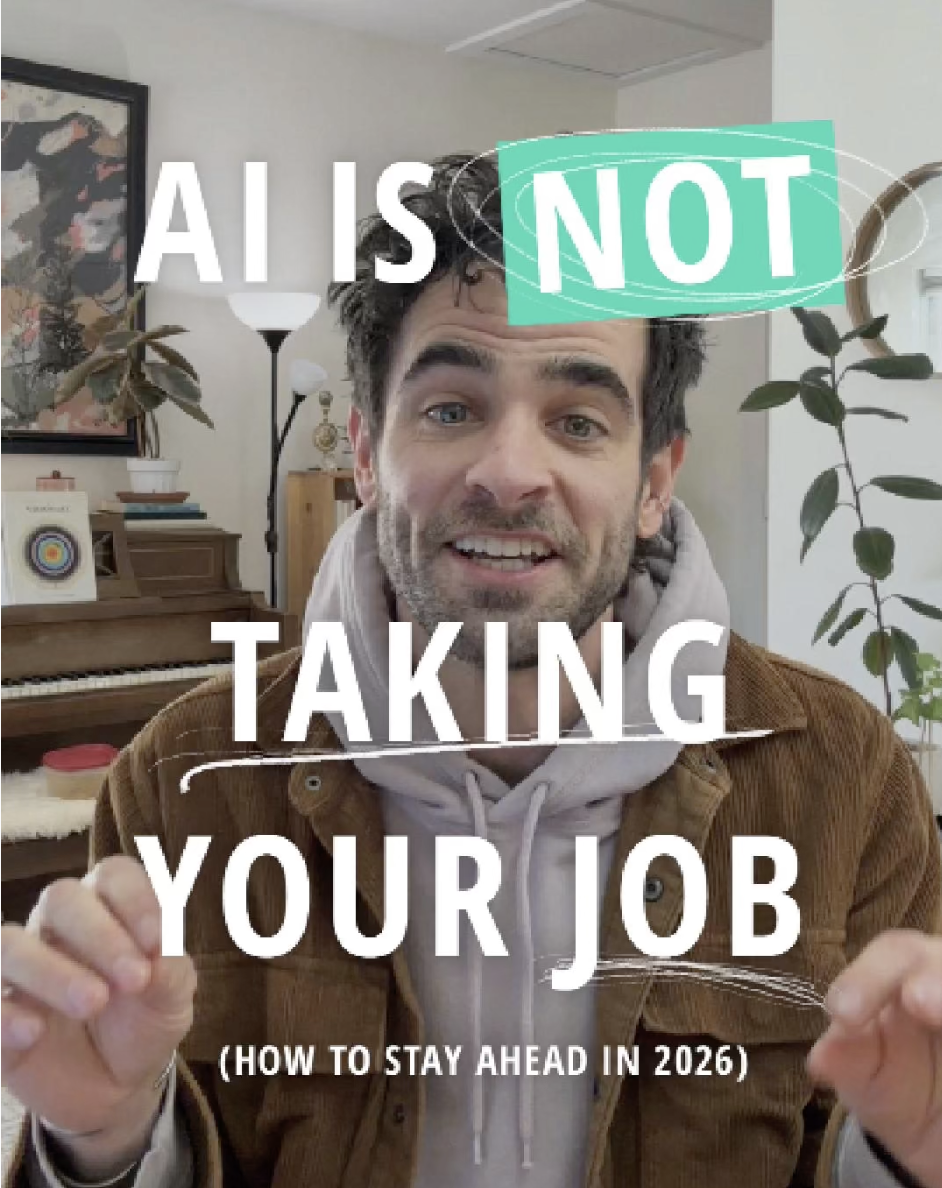
Will AI replace graphic designers? The importance of human-led design.
Will AI replace graphic designers? The importance of human-led design.
How do we combat the inundation of AI? Human-led design is the design of the future.
There’s a lot of fear mongering about AI taking our jobs.
“Graphic designers are cooked, look at this logo I just made” is a common theme in my algorithm … only to then see someone post a garbage logo that looks like an amalgamation of 3 stock illustrations paired with an uninspired wordmark 🙄
With the new, AI-powered ability to “instantly create anything”, I foresee a higher demand for thoughtful, human, process-driven creative work. The polish and fast-paced nature of AI will quickly fatigue, and the masses will seek design that feels like it was made by someone, not something. People think they want fast AI outputs, but will quickly remember the benefit of slow and intentional creation.
What’s would you rather have, a Hot Pocket, or Grandma’s slow-cooked calzone? (No offense, Hot Pockets. You were a staple food item in my youth.)
One could actually argue that the rise of AI is increasing the value of thoughtful, human-led design. This is a perspective I’m taking!
I recently teamed up with Creative Market to highlight how design that embraces humanity is the design of the future. By talking through our creative approach to building a bourbon brand, I highlight how and why human-led design will stand out this year.
(Note: this article is my own thoughts: Creative Market did NOT pay me to write this article.)
A brand that feels human
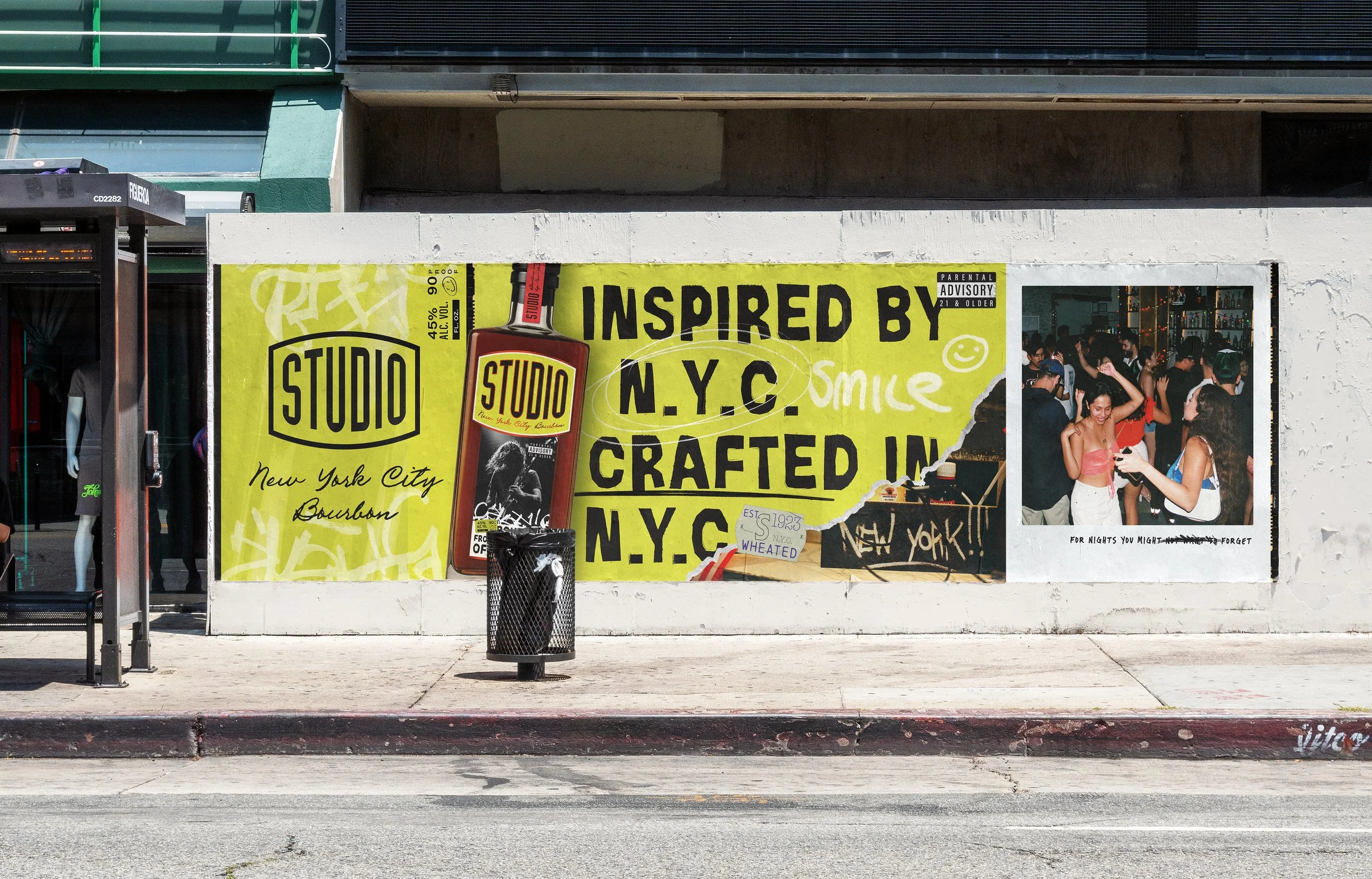
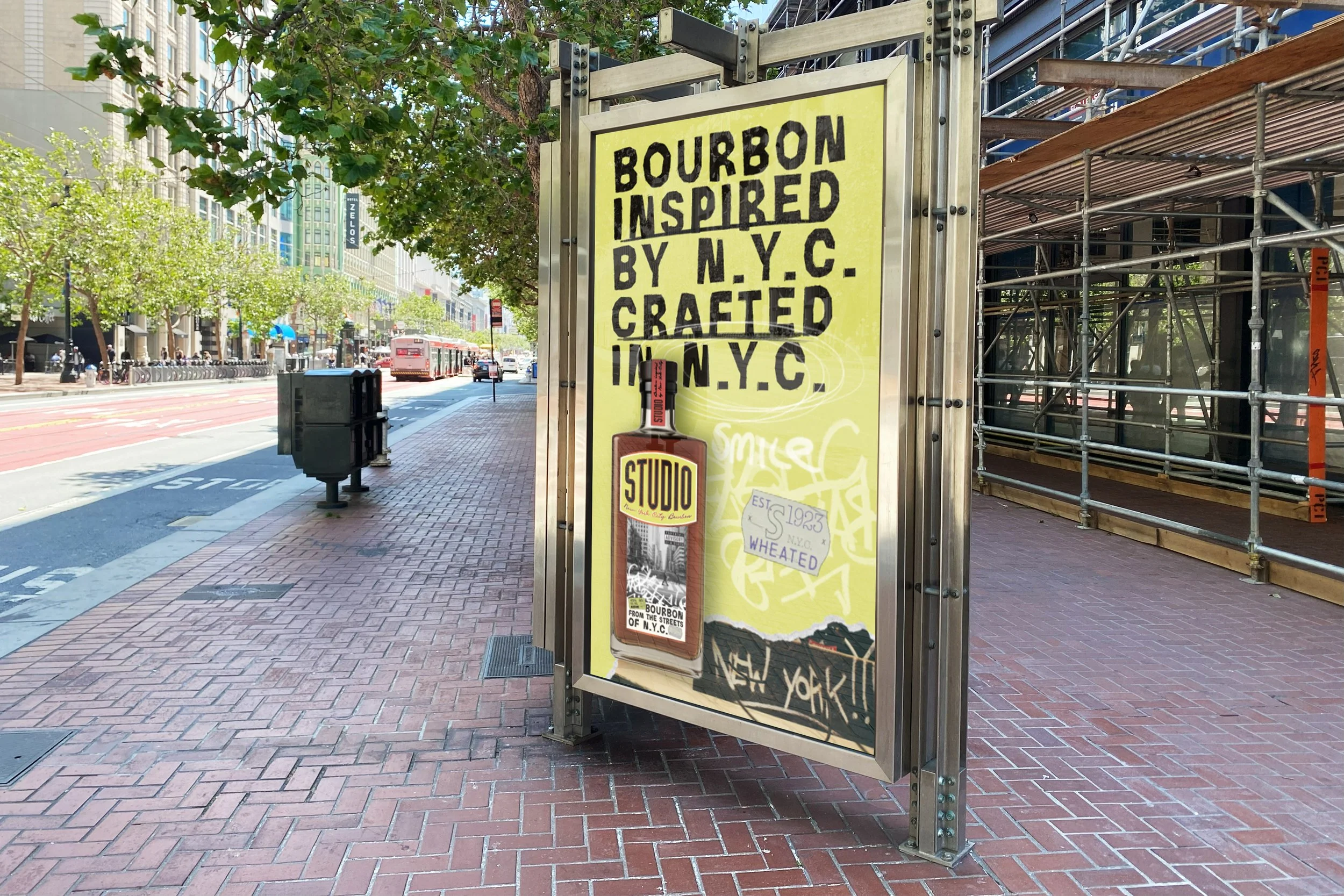
We’re currently working on a project for Studio Bourbon, a new bourbon brand based in New York City. The goal of the project was to capture the essence of New York nightlife. Think: late-night basement parties, graffiti, music, and dancing.
This brand is everything that artificial intelligence is not: human.
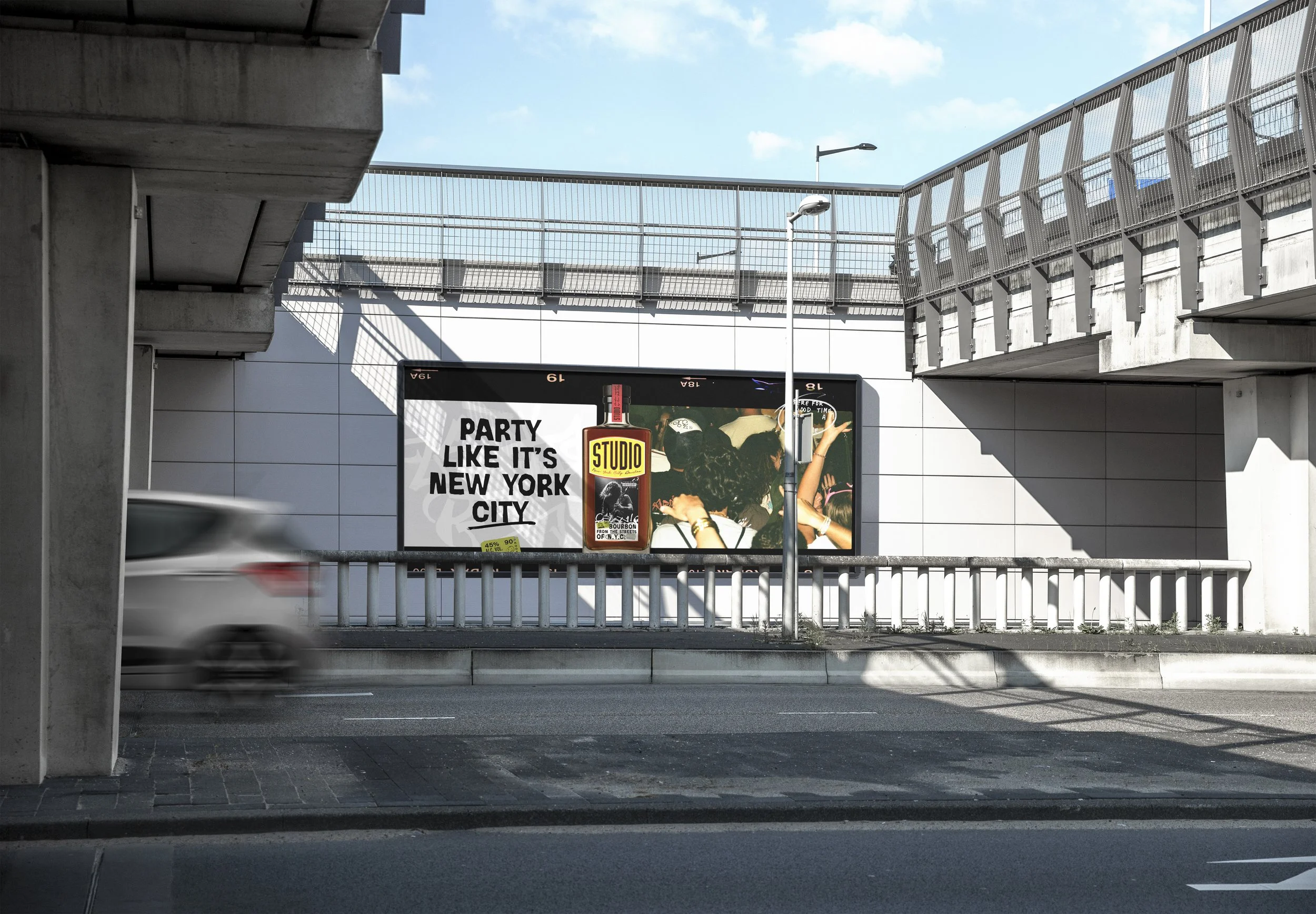
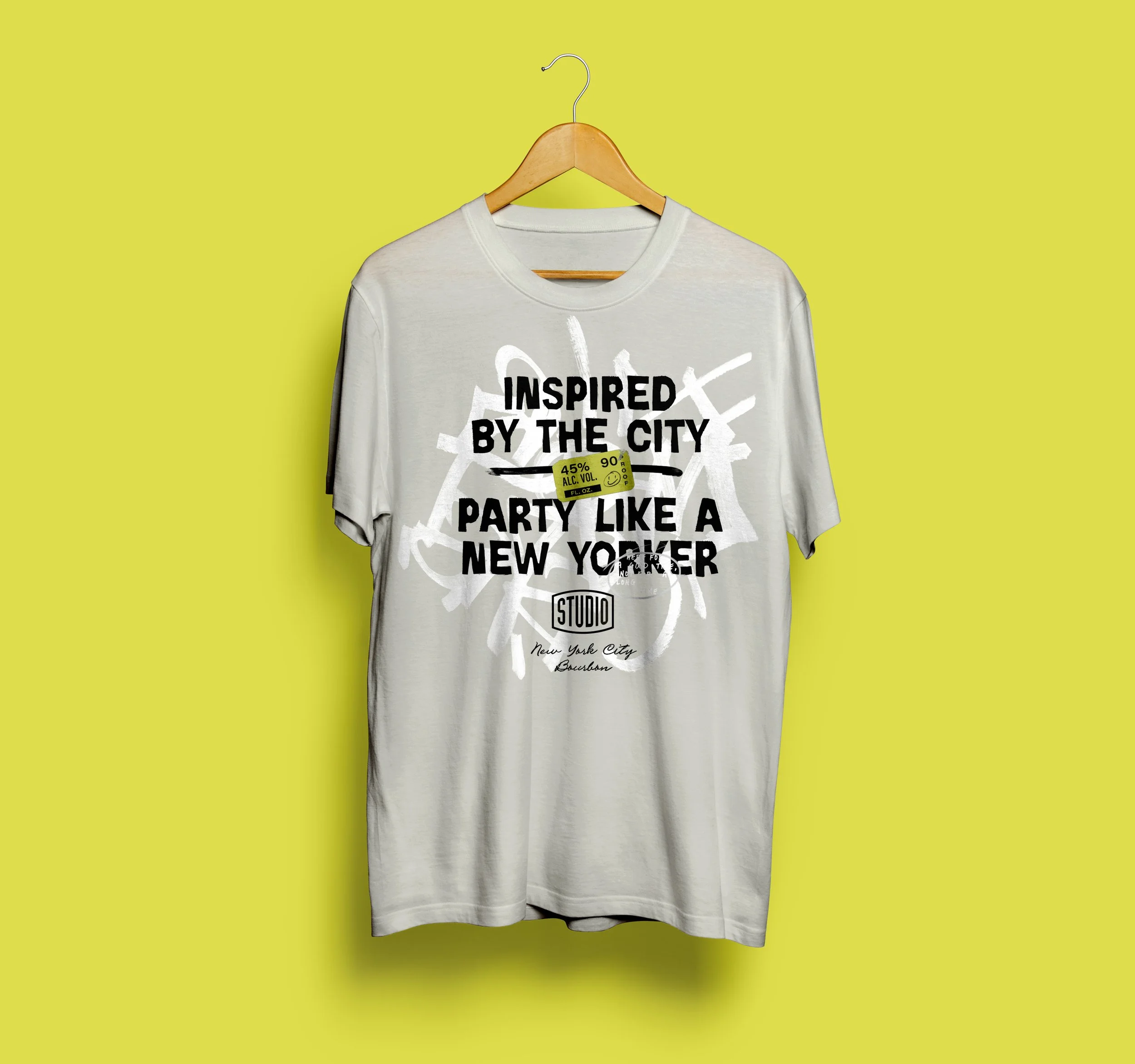
The visual world we’re building for Studio Bourbon is expressive, layered, and a little chaotic, just like NYC. The posters feel wheat-pasted, the typography feels hand-drawn, and the imagery feels like a snapshot from a night (that may be a bit blurry) where you had a bit too much bourbon.
And that’s exactly the point.
The pieces that make this brand feel the most alive are also the things that feel the least manufactured. These imperfect, human moments are not only the pieces that feel anti-AI, but they’re the pieces that will resonate the most with people. They’re the pieces that feel immersive, and filled with story, which is ultimately what will help the bourbon sell.
The 2026 design trend I see emerging
As I look at the year ahead, I’m convinced the brands that will thrive are the ones that embrace this human-made, human-touched and human-aware feel. They will feel thoughtful, imperfect, approachable and human.
The internet is already flooded with AI slop. Some reports actually suggest that as much as 50% of certain Pinterest categories are AI-generated images. Wow – gross.
With perfection being so easily attainable with AI, the pendulum will quickly swing the opposite way. There’s some irony in the fact that the more ubiquitous AI becomes, the more valuable our human perspective becomes.
Imperfection makes brands memorable because it makes them relatable
The perfectly imperfect approach: I love this.
The Studio Bourbon visuals are heavily influenced by street culture: ripped textures, graffiti and spray paint marks, collage elements, and handwritten notes. The energy of the brand transcends the communication itself. That’s the goal. Because we’re connecting this brand with culture, we’re connecting to the threads of human nature.
New York nightlife isn’t pristine. And, it sure as shit isn’t calm or expected. It’s loud, spontaneous, and messy in the best possible way. We built Studio Bourbon to reflect that by adding drawn, illustrated and scribbled elements into our brand as much as possible. Layers, textures … you almost feel like you can smell it. Which, in NYC isn’t always a good thing haha.
All designers know that crafting original elements by hand can take a lot of time and resources, and budgets and timelines don’t always allow for this approach. But that doesn’t mean we need to strip it of our vision: for this project we used mockups, hand written typography, collage elements, scribbles and textures from Creative Market. By downloading assets that have already been thoughtfully created, we save hours (more likely, days) of work. I knew what I wanted, I knew the vibe I was after, and I was able to easily find, download and implement those assets.
Designers care. Computers compute.
Unlike a computer, most designers actually care about this work. A lot. That’s why we got into this profession in the first place. The fact that design sites like BrandNew, which features newly-launched rebrand projects, has people arguing about kerning in the comments… that says it all 😂
Our attention to detail as designers is what enables us to create work that feels alive. Even if we don’t execute that work perfectly, that human care and attention is what separates us from the bots. A nuanced, lived and experienced human perspective is something that AI will never be able to replicate. It will try. But it will fall short.
The future of graphic design is human-led design
If you’re concerned about AI taking your job, it is my current personal philosophy to spend less time (head space, energy, attention) worrying about the technology, and spend more time elevating your craft, marketing yourself, and infusing your humanity into your work. Whether that humanity comes through in your copywriting, art direction, execution, or point of view, that’s up to you. That’s YOUR human choice to make.
The designers who thrive over the next decade won’t be the ones competing WITH the machines. They’ll be the ones using the machines to do the dirty work while making work that machines can only try to replicate in the first place.
The future of design isn’t artificial. It’s human-led.
——
An important disclaimer: I’m not anti-AI. While I do have plenty of ethical and environmental concerns, I also recognize that my personal resistance doesn’t change the trajectory of the industry. It mostly just stagnates my own future. I am experimenting with AI for things like information processing, research, project management, biz dev, operations and early brainstorming. And frankly, I want to support my family in the future. So, I’m experimenting with it as much as I reasonably can. Learning how it works, how to interact with it, where it’s useful, and where it falls short. At this point, my thinking is simply this: luck favors the prepared. So, I’m using the tech in some places, and staying human in others.